
Security
Isolation enforced by the infrastructure,
at three levels.
Each client constitutes a root of isolation in the database and in the permission graph. Segregation does not depend on a filter written correctly in every query: it is enforced by the storage layer.
Data
Isolation is enforced in the database, across every table. A query that escapes the application returns empty. Clients with a regulatory requirement for physical segregation are given a dedicated database.
Objects
Authorization by relationship rather than by job title: who may access a given folder, a given project or a given file, with inheritance down the hierarchy. A graph with 13 types and 65 relations governs the interface, files, search and agents.
Applications
Each application declares in a manifest the data and capabilities it uses, and the manifest is immutable per version. Expanding scope requires publishing a new version, which makes it visible and auditable.
Transactional installation
The application record and the corresponding permissions are written in the same transaction. There is no intermediate state in which an application is installed without the permissions that make it reachable, or the reverse.
Complete audit
The record is append-only and covers both granted and denied access, with author, object and timestamp. The Logs application makes that trail directly available to the administrator, which supports compliance processes with verifiable evidence.
Federated identity
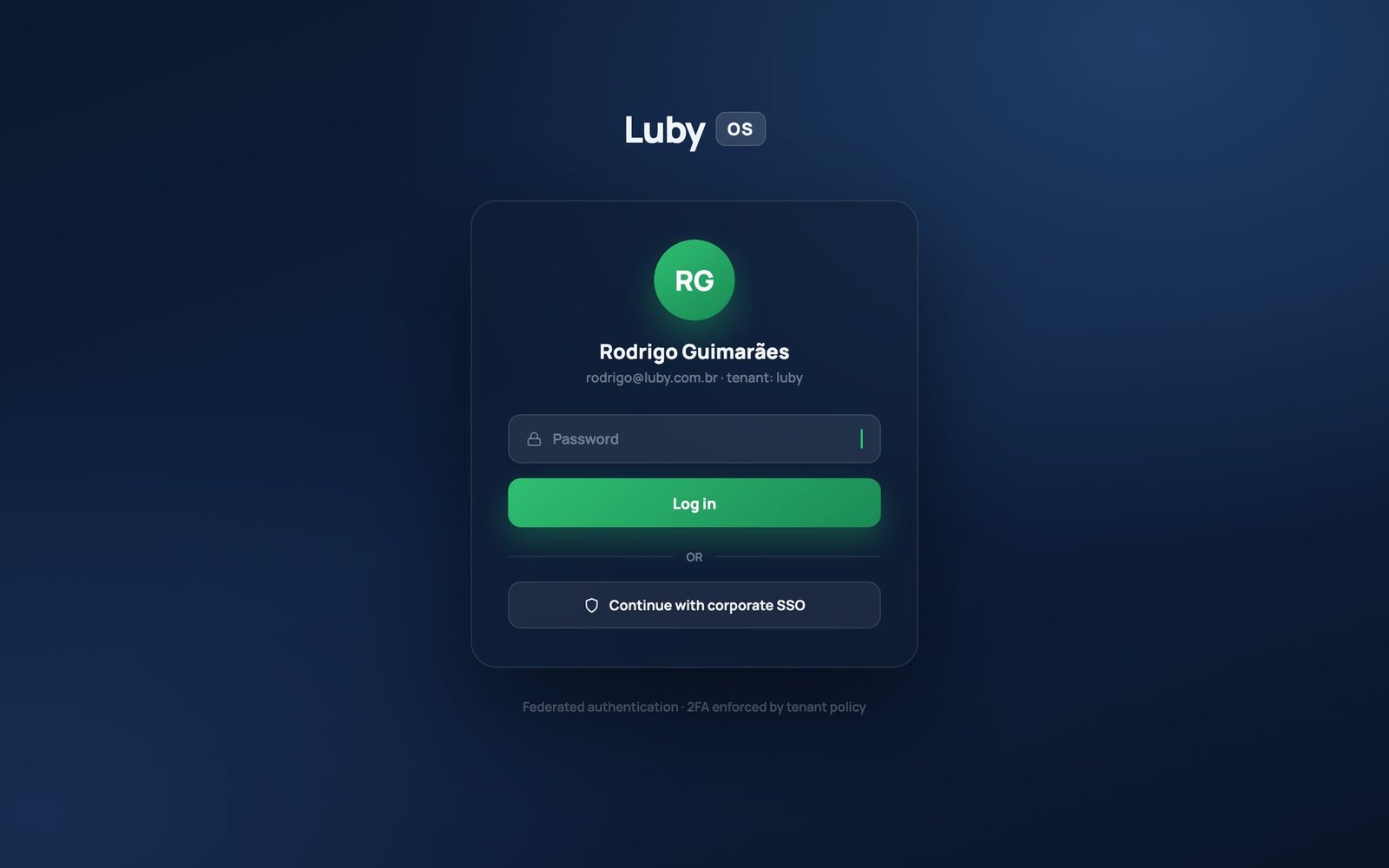
Authentication is delegated to the corporate identity provider, with provisioning on first access and immediate revocation on offboarding. There is no platform-specific credential to manage separately.
Secrets in a vault
Credentials for integrated systems are stored in a dedicated vault. The operational database holds only the reference, never the secret.
The decision to deny access is the server's. Filtering the interface improves navigation, and the kernel revalidates permission on every access, including when the request originates from an AI agent.